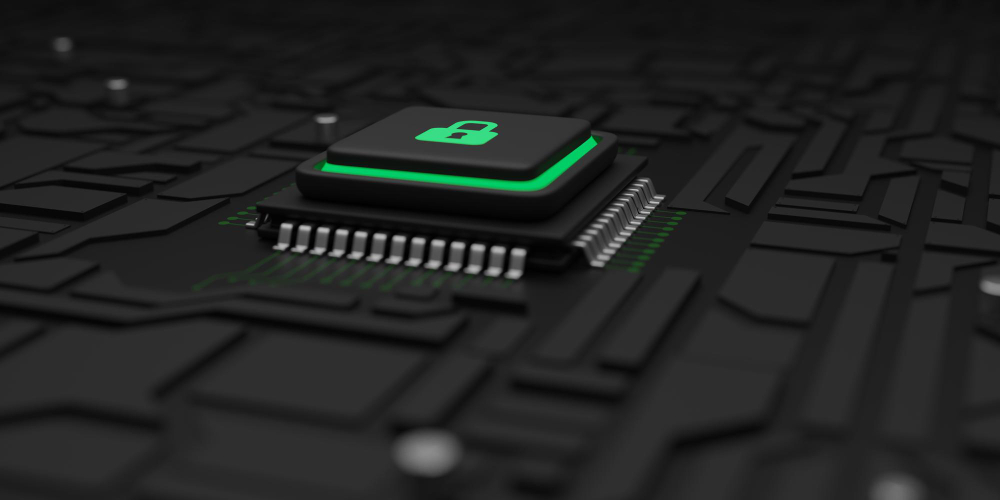
Hardware Security Tech is rapidly becoming the invisible armor of our digital world. As cyber threats grow more complex and persistent, security measures can no longer rely on software alone. The foundation of digital trust now lies deep within the silicon — inside the microchips that power our devices, servers, and critical infrastructure.
Imagine a future where security is not an add-on feature but a built-in, tamper-proof layer woven directly into the hardware itself. That future is already unfolding, thanks to advances in Hardware Security Tech that protect everything from smartphones and smart cars to data centers and government systems.
The Rise of Hardware-Based Security
For decades, cybersecurity has focused on software — firewalls, antivirus tools, and encryption protocols designed to detect and block attacks. But hackers have evolved, finding new ways to exploit firmware, BIOS, and even physical chip-level vulnerabilities.
Hardware Security Tech steps in to close these gaps by embedding protection directly into the hardware components. Unlike software that can be updated, altered, or hacked, microchip-based security creates a root of trust that’s far harder to breach.
When data protection begins at the hardware level, it becomes exponentially more difficult for attackers to manipulate systems. Think of it as securing the foundation of a house before building the walls — without it, the entire structure remains vulnerable.
How Hardware Security Tech Works
At its core, Hardware Security Tech is about safeguarding data and device integrity through physical and cryptographic measures built into microchips. These include features like secure enclaves, trusted execution environments (TEEs), and hardware-based encryption modules.
A trusted execution environment ensures that sensitive data, like passwords or encryption keys, is processed in an isolated area of the chip, inaccessible to other software layers. This isolation means that even if malware infects a device, it cannot reach the most critical data.
For instance, modern processors from companies like Intel and ARM include secure areas that handle encryption and biometric authentication separately from general operations. Similarly, Apple’s Secure Enclave is a prime example of how Hardware Security Tech protects sensitive user information like Face ID data.
These embedded safeguards form the foundation for trusted computing — where each component verifies the authenticity of others before allowing access.
The Importance of Microchip-Level Defense
Microchips sit at the heart of every digital device, from smartphones to satellites. As such, any breach at this level could have catastrophic implications.
Attackers targeting firmware or physical chips can bypass traditional software security, gaining deep system access that’s often undetectable. Hardware Security Tech prevents this by establishing immutable trust anchors that validate the identity and integrity of every connected device.
In industries like finance, defense, and healthcare, this level of protection isn’t just beneficial — it’s essential. For example, financial institutions rely on hardware security modules (HSMs) to securely process cryptographic keys and digital signatures that power online transactions.
When these systems use microchip-based protection, the risk of data theft or unauthorized access drops dramatically, preserving both security and consumer trust.
Hardware Security Tech in Everyday Devices
The beauty of Hardware Security Tech lies in its silent operation. Users rarely notice it, yet it shields them from countless threats daily.
Smartphones use secure chips to store biometric data and payment credentials safely. Smart home devices rely on embedded hardware encryption to verify legitimate updates and prevent hijacking. Even connected cars depend on chip-level security to ensure that commands come only from verified systems.
This seamless integration makes security feel effortless. While users enjoy convenience and connectivity, the hardware quietly enforces digital safety beneath the surface.
In essence, the modern digital ecosystem now runs on a hidden layer of hardware trust — one that’s redefining how we think about cybersecurity.
The Evolution of Hardware Root of Trust
At the core of Hardware Security Tech is the concept of a “root of trust.” This is a secure foundation within the hardware that authenticates every action performed by the system.
Before a device even starts its operating system, the hardware verifies that the boot code is legitimate. If any tampering or unauthorized modification is detected, the process halts, preventing malware from executing.
This concept has become a cornerstone for secure computing. Tech giants like Microsoft use hardware roots of trust in their devices through features such as TPM (Trusted Platform Module) chips, which ensure secure boot and encryption key management.
Such innovations have significantly improved resilience against firmware-based attacks, which were once nearly impossible to detect.
Real-World Applications and Case Studies
Several real-world implementations showcase how Hardware Security Tech enhances digital protection.
For instance, in the Internet of Things (IoT), devices like medical sensors or smart locks are notoriously vulnerable. By embedding unique cryptographic identifiers into each chip, manufacturers can authenticate devices in real time, ensuring they’re legitimate and uncompromised.
In the automotive industry, microchip-based security helps prevent remote hijacking of vehicle systems. The chips verify every incoming command to ensure that only authorized updates or inputs are accepted.
Data centers and cloud providers are also adopting secure processors that encrypt data at rest and in transit, ensuring that even internal staff cannot access customer information without proper authorization.
Each of these use cases highlights a shift — from reactive security to proactive, hardware-based defense.
Challenges in Implementing Hardware Security Tech
Despite its promise, the widespread adoption of Hardware Security Tech comes with challenges.
Manufacturing secure microchips requires precision and substantial investment. Every additional layer of protection adds complexity to design and production. Furthermore, ensuring that supply chains remain tamper-free is another growing concern.
Supply chain attacks, where malicious actors insert compromised components during manufacturing, pose a serious risk. To combat this, companies are investing in secure production facilities and traceable chip verification processes.
Additionally, hardware cannot be updated as easily as software, so once vulnerabilities are discovered, fixing them can be costly. This makes robust design and rigorous testing crucial from the outset.
Future of Hardware Security Tech
The next frontier for Hardware Security Tech lies in intelligent integration. AI-driven microchips capable of detecting anomalies at the hardware level will soon be standard.
These smart security chips will monitor system behavior in real time, identifying potential breaches even before traditional software alerts trigger. Quantum-resistant hardware encryption is also being developed to safeguard data from future quantum computing threats.
Moreover, hardware security will extend beyond individual devices to entire networks. Imagine an ecosystem where every connected component — from sensors to servers — continuously authenticates itself through secure chip identifiers.
This vision, known as the “Zero Trust Hardware Model,” ensures that no device or user is trusted by default, adding another crucial layer to global cybersecurity.
Human-Centric Design in Hardware Security
While Hardware Security Tech focuses on machines, its ultimate goal remains human safety and trust.
From protecting personal privacy to safeguarding global infrastructure, this technology reinforces the invisible barrier between chaos and control. As devices become more autonomous, ensuring that humans remain in control requires security that’s not just strong but embedded.
Hardware-level defense ensures that users don’t have to be cybersecurity experts to stay protected. It democratizes safety by building trust directly into the tools we use every day.
In that sense, Hardware Security Tech isn’t just about protecting data — it’s about preserving confidence in a world where technology touches every part of life.
Read also:
kolkata knight riders vs royal challengers bengaluru match scorecard
clearskinstudy emails addresses
airtel merco
vmake apk mod
