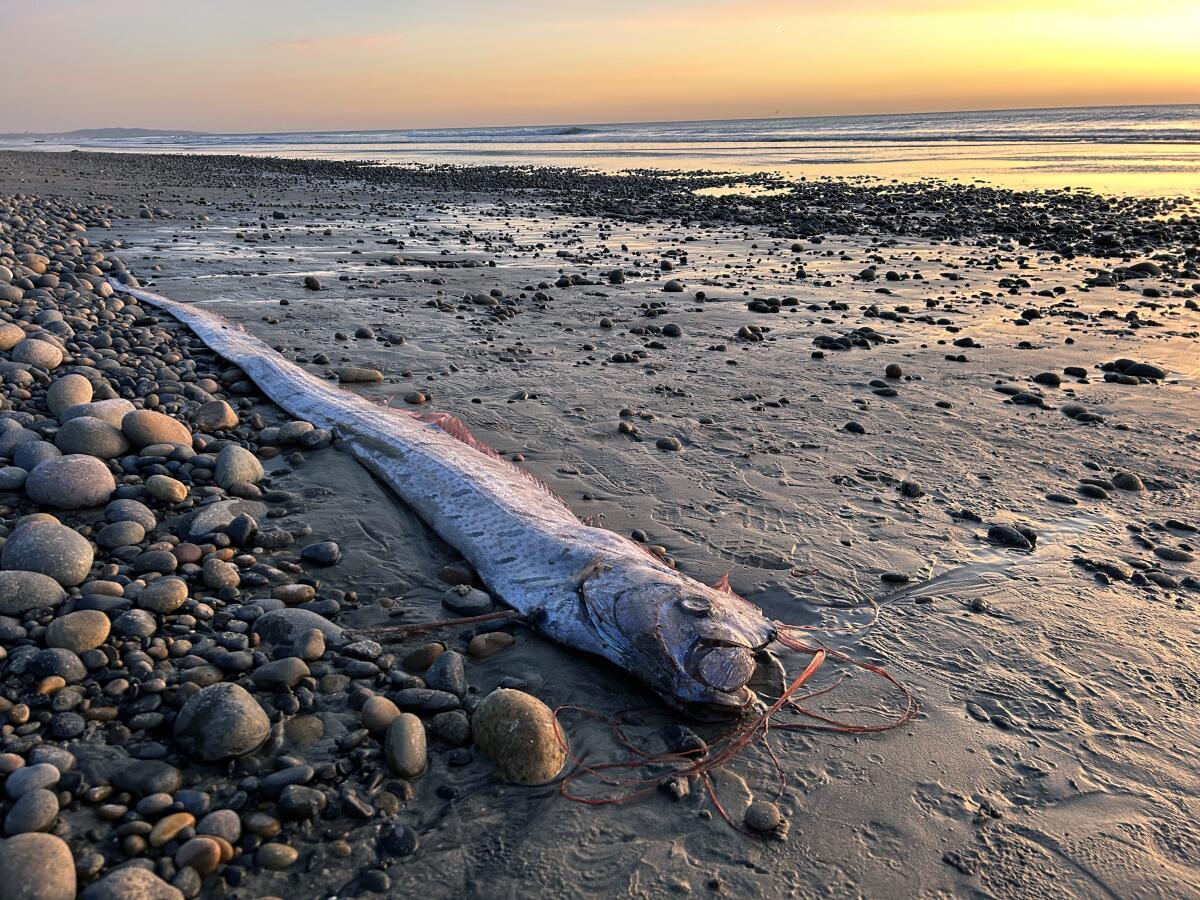
The coastal waters of Southern California are known for their diverse marine life and fascinating underwater ecosystems. However, among the myriad of sea creatures that inhabit these waters, there is one that has captured the imagination and curiosity of both locals and marine biologists alike—the Southern California Doomsday Fish. This article delves deep into the legends, scientific explanations, and the cultural impact of this enigmatic creature.
:max_bytes(150000):strip_icc():focal(829x698:831x700)/Doomsday-Fish-111824-1-tout-b683a04ab7804fd08df8165a024cefa6.jpg)
What is the Southern California Doomsday Fish?
The Southern California Doomsday Fish refers to the oarfish, a deep-sea species known for its elongated body and mysterious behavior. Oarfish can grow to remarkable lengths, often exceeding 20 feet, making them one of the longest bony fish in the ocean. The name “doomsday fish” stems from ancient legends and local folklore, which claim that sightings of these elusive creatures are harbingers of impending natural disasters, particularly earthquakes.
The Legends and Folklore
The belief that the Southern California Doomsday Fish is an omen of earthquakes has roots in Japanese mythology. Known as “Ryugu no tsukai” or “Messenger from the Sea God’s Palace,” the oarfish is thought to rise from the depths before an earthquake strikes. This legend has transcended cultures and taken hold in Southern California, where sightings of the Southern California Doomsday Fish are met with a mix of fascination and apprehension.
Scientific Explanations
While the legend of the Southern California Doomsday Fish is intriguing, scientists have offered more grounded explanations for the appearances of these deep-sea creatures. Oarfish are typically found at depths of 200 to 1,000 meters, making their sightings near the surface rare and noteworthy. Several hypotheses have been proposed to explain why these fish might venture into shallower waters:
- Seismic Activity: There is some speculation that seismic activity could disrupt the habitats of oarfish, causing them to swim to the surface. However, scientific evidence linking oarfish sightings to earthquakes is inconclusive.
- Currents and Temperature Changes: Changes in ocean currents and water temperatures could also displace oarfish from their deep-sea homes, leading to occasional sightings near the coast.
- Health Issues: Oarfish that appear near the surface may be sick or injured, seeking refuge in shallower waters as a result.
Despite these scientific theories, the connection between the Southern California Doomsday Fish and natural disasters remains a topic of debate and intrigue.
Sightings and Encounters
Over the years, there have been several notable sightings of the Southern California Doomsday Fish, each adding to the creature’s mystique. One of the most famous incidents occurred in 2013, when a giant oarfish was discovered off the coast of Catalina Island. The specimen measured 18 feet long and drew considerable media attention, sparking renewed interest in the legend of the Southern California Doomsday Fish.
In 2020, another sighting near San Diego reignited discussions about the connection between oarfish and earthquakes, particularly as it coincided with a period of heightened seismic activity in the region. These sightings have contributed to the enduring allure and mystery of the Southern California Doomsday Fish.
Cultural Impact and Media Representation
The Southern California Doomsday Fish has not only fascinated scientists and locals but also made its way into popular culture. From documentaries and news reports to fictional stories and movies, the image of the oarfish as a prophetic creature continues to capture the imagination of audiences worldwide.
In literature, the Southern California Doomsday Fish is often portrayed as a mythical guardian of the sea, warning humanity of impending dangers. This narrative reinforces the idea that nature itself can communicate with us, urging us to pay attention to the signs and maintain a harmonious relationship with the environment.
Conservation and Research
As interest in the Southern California Doomsday Fish grows, so does the need for conservation and research efforts. Oarfish are considered a species of least concern by the International Union for Conservation of Nature (IUCN), but their elusive nature means that much about their biology and behavior remains unknown.
Marine biologists and oceanographers are working to learn more about the habitat, diet, and life cycle of oarfish. By studying the Southern California Doomsday Fish, scientists hope to gain insights into the health of deep-sea ecosystems and the potential impacts of environmental changes on marine life.
Conclusion: The Ongoing Fascination with the Southern California Doomsday Fish
The legend of the Southern California Doomsday Fish is a compelling blend of myth, science, and cultural significance. While the idea of a fish predicting natural disasters may seem far-fetched, the oarfish’s mysterious appearances and the deep-seated human desire to find meaning in natural phenomena ensure that the legend will endure.
In our quest to understand the Southern California Doomsday Fish, we are reminded of the vast and largely unexplored world beneath the ocean’s surface. As research continues and new discoveries are made, the Southern California Doomsday Fish will undoubtedly remain a symbol of the enigmatic beauty and power of the sea.
